Article-Journal

Bright Aggregation-Induced-Emission Dots for Targeted Synergetic NIR-II Fluorescence and NIR-I Photoacoustic Imaging of Orthotopic Brain Tumors
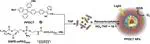
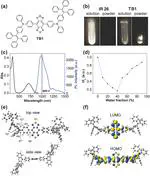
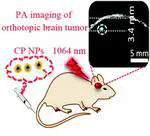
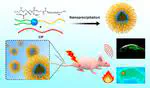
Precise diagnostics are of significant importance to the optimal treatment outcomes of patients bearing brain tumors. NIR-II fluorescence imaging holds great promise for brain-tumor diagnostics with deep penetration and high sensitivity. This requires the development of organic NIR-II fluorescent agents with high quantum yield (QY), which is difficult to achieve. Herein, the design and synthesis of a new NIR-II fluorescent molecule with aggregation-induced-emission (AIE) characteristics is reported for orthotopic brain-tumor imaging. Encapsulation of the molecule in a polymer matrix yields AIE dots showing a very high QY of 6.2% with a large absorptivity of 10.2 L g−1 cm−1 at 740 nm and an emission maximum near 1000 nm. Further decoration of the AIE dots with c-RGD yields targeted AIE dots, which afford specific and selective tumor uptake, with a high signal/background ratio of 4.4 and resolution up to 38 µm. The large NIR absorptivity of the AIE dots facilitates NIR-I photoacoustic imaging with intrinsically deeper penetration than NIR-II fluorescence imaging and, more importantly, precise tumor-depth detection through intact scalp and skull. This research demonstrates the promise of NIR-II AIE molecules and their dots in dual NIR-II fluorescence and NIR-I photoacoustic imaging for precise brain cancer diagnostics.
Bright Aggregation-Induced-Emission Dots for Targeted Synergetic NIR-II Fluorescence and NIR-I Photoacoustic Imaging of Orthotopic Brain Tumors
Photophysics of an Asymmetric Donor–Acceptor–Donor′ TADF Molecule and Reinterpretation of Aggregation-Induced TADF Emission in These Materials
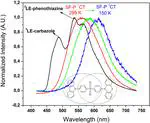
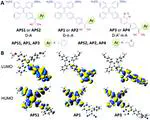
We report an in-depth photophysical investigation of an asymmetric donor–acceptor–donor′ (D–A–D′) thermally activated delayed fluorescence (TADF) molecule (4-(9H-carbazol-9-yl)phenyl)(4-(10H-phenothiazin-10-yl)phenyl)sulfone and compare its photophysical properties to the parent symmetric D–A–D and D′–A–D′ molecules. These D–A–D type small molecules all show strong TADF. The work reveals how the relative orientations of D–A (D′–A) moieties favor reverse intersystem crossing (rISC) by forming stable charge transfer (CT) states. The key requirement for the efficient TADF emitters is to achieve a very small CT-local triplet state energy splitting, which is shown to be complex in the asymmetric molecule. Throughout the investigations, we show that in the asymmetric D–A–D′ system, even though ECT (D–A) > ECT (D′–A), no evidence of energy transfer from D–A to A–D′ is observed, nor from excited D to D′. This is ascribed to the near orthogonality of the D and D′ units and the very strong decoupling of the electrons on the D and A in the CT state. In addition, the possibility of aggregation-induced TADF (AI-TADF) is examined and shown to be a manifestation of solvatochromism in these particular molecules.
Photophysics of an Asymmetric Donor–Acceptor–Donor′ TADF Molecule and Reinterpretation of Aggregation-Induced TADF Emission in These Materials