Article-Journal

Rational Design of a Red-Emissive Fluorophore with AIE and ESIPT Characteristics and Its Application in Light-Up Sensing of Esterase
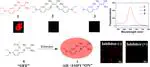
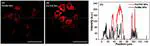
The development of red fluorophores with efficient solid-state emission is still challenging. Herein, a red fluorophore 1 with aggregation-induced emission (AIE) and excited-state intramolecular proton transfer (ESIPT) characteristics is rationally designed and facilely synthesized by attaching an electron-donor diethylamine and an electron-acceptor maleonitrile group to salicyladazine. In contrast to many red fluorophores which undergo serious aggregation-caused quenching (ACQ), compound 1 emits bright red fluorescence (λem = 650 nm, ΦF = 24.3%) in the solid state with a large Stokes shift of 174 nm. Interestingly, control compounds 2 and 3, which have similar structures as 1, exhibit obvious aggregation-caused quenching (ACQ) characteristics. The difference in the crystal structures of 1, 2, and 3 reveals that the interplanar spacing among molecules plays a decisive role in realizing the AIE characteristics of 1. Moreover, when the hydroxyl group of 1 was substituted by an esterase reactive acetoxyl, a fluorescence light-up probe 4 was developed for sensing of esterase based on the selective reaction between 4 and esterase to generate the AIE and ESIPT active molecule 1. The linear range for in vitro quantification of esterase is 0.01–0.15 U/mL with a detection limit of 0.005 U/mL. Probe 4 was also successfully applied to image esterase in mitochondria of living cells.
Rational Design of a Red-Emissive Fluorophore with AIE and ESIPT Characteristics and Its Application in Light-Up Sensing of Esterase
A Porphyrin-Based Conjugated Polymer for Highly Efficient In Vitro and In Vivo Photothermal Therapy
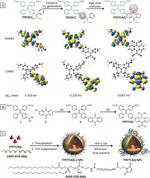
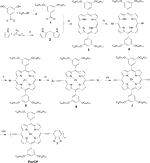
Conjugated polymers have been increasingly studied for photothermal therapy (PTT) because of their merits including large absorption coefficient, facile tuning of exciton energy dissipation through nonradiative decay, and good therapeutic efficacy. The high photothermal conversion efficiency (PCE) is the key to realize efficient PTT. Herein, a donor-acceptor (D-A) structured porphyrin-containing conjugated polymer (PorCP) is reported for efficient PTT in vitro and in vivo. The D-A structure introduces intramolecular charge transfer along the backbone, resulting in redshifted Q band, broadened absorption, and increased extinction coefficient as compared to the state-of-art porphyrin-based photothermal reagent. Through nanoencapsulation, the dense packing of a large number of PorCP molecules in a single nanoparticle (NP) leads to favorable nonradiative decay, good photostability, and high extinction coefficient of 4.23 �� 104 m-1 cm-1 at 800 nm based on porphyrin molar concentration and the highest PCE of 63.8% among conjugated polymer NPs. With the aid of coloaded fluorescent conjugated polymer, the cellular uptake and distribution of the PorCP in vitro can be clearly visualized, which also shows effective photothermal tumor ablation in vitro and in vivo. This research indicates a new design route of conjugated polymer-based photothermal therapeutic materials for potential personalized theranostic nanomedicine.
A Porphyrin-Based Conjugated Polymer for Highly Efficient In Vitro and In Vivo Photothermal Therapy